



When I learned about the true scale of factory farming, I was miserable. I couldn’t believe I’d never given it more thought. What followed was a brief burst of optimism — surely if others knew about this, they'd make the right choices. They didn't. Year after year, factory farming kept growing, people kept eating more animals, and my optimism curdled into bitterness, then anger, then doom.
It felt like only a small fraction of people cared enough to dedicate real energy or resources to this cause. Even among those who did, disagreements outnumbered agreements. Should we give animals a good life on sanctuaries, or prioritize reducing expected suffering at scale? Should we focus on saving lives or averting suffering? And more recently, should we forget Veganuary, or forget Farmkind? For a long time, I used such questions as a purity test — one mismatch in answers and that was it: you didn’t really get the cause.
I suspect I wasn’t alone. Accept this mindset, and bitterness becomes inevitable. We resent those who disagree, retreat into bubbles, and bond over shared ‘vystopia’ (a real subreddit for sharing the dread and dystopia of living in a non-vegan world).
The Golden Era of Cooperation
But step away from the animal movement for a moment, and you’ll find the world is far more cooperative than it seems. Cooperation is so deeply embedded in our societies that we take it for granted.
Consider the routine “double thank-you” moments that fill our lives, exchanges where everyone walks away better off:
How many times have you paid $1 for a cup of coffee and after the clerk said, “Thank you,” you responded, “Thank you”? There’s a wealth of economics wisdom in the weird double thank-you moment. Why does it happen? Because you want the coffee more than the buck, and the store wants the buck more than the coffee. Both of you win.
We live in the golden era of cooperation. We cooperate across greater distances, with an ever-broadening coalition of communities, cultures, societies, and nations — as evidenced by increasing global trade. We even cooperate across time, global debt is just promises between strangers across generations.
But why do win-wins take off? Because when everyone benefits, no one resists. And when no one resists, making progress is easier.
Our world presents countless opportunities to make everyone better off. It’s up to us to adopt this mindset and create win-wins for everyone involved, including animals.
Being an ally doesn’t require shared ideology. We can cooperate with almost anyone. Consider these scenarios where our interests align with unlikely partners:
Male chick culling: We want to spare male chicks from being killed on their first day of life; egg industries want to use in-ovo sexing to avoid incubating unprofitable chicks. Either way, we spare billions of chicks.
Factory farm reform: We want fewer animals in factory farms; factory farms want to reduce “excess” deaths from disease so they don’t need to breed replacements. Either way, fewer animals suffer.
Alternative proteins: We want cultivated meat to displace factory-farmed meat; governments may invest in these technologies for self-reliance and biosecurity. Either way, these projects get funded.
Consumer adoption: We want consumers to choose plant-based or cultivated meat for moral reasons; many will choose it simply because it’s tasty, cheaper, or nutritious. Either way, what matters is that they choose it.
Once you adopt a win-win mindset, strategic alignments appear everywhere.
But hold on a minute!
Since the win-win mindset is so powerful, it's tempting to think: if only others saw the world this way, we could create so much more impact. But here's the thing, if we could make progress by convincing everyone to see the world our way, we wouldn't need win-win strategies at all!
Not everyone in this cause shares the same principles. Some seek virtue; others seek to maximize utility. If progress for animals required every conservative to become a progressive, every deontologist to become a utilitarian, or every meat-eater to become a vegetarian, I wouldn’t expect much progress at all.
My guess is that a power law applies to advocacy — a small set of pragmatic approaches may drive most of the results. But trying to convert other advocates to these approaches misses the point. People do what they’re motivated to do. The real win-win is that we grow the total impact on reducing animal suffering.
It helps to remember that animal welfare enjoys overwhelming public support.
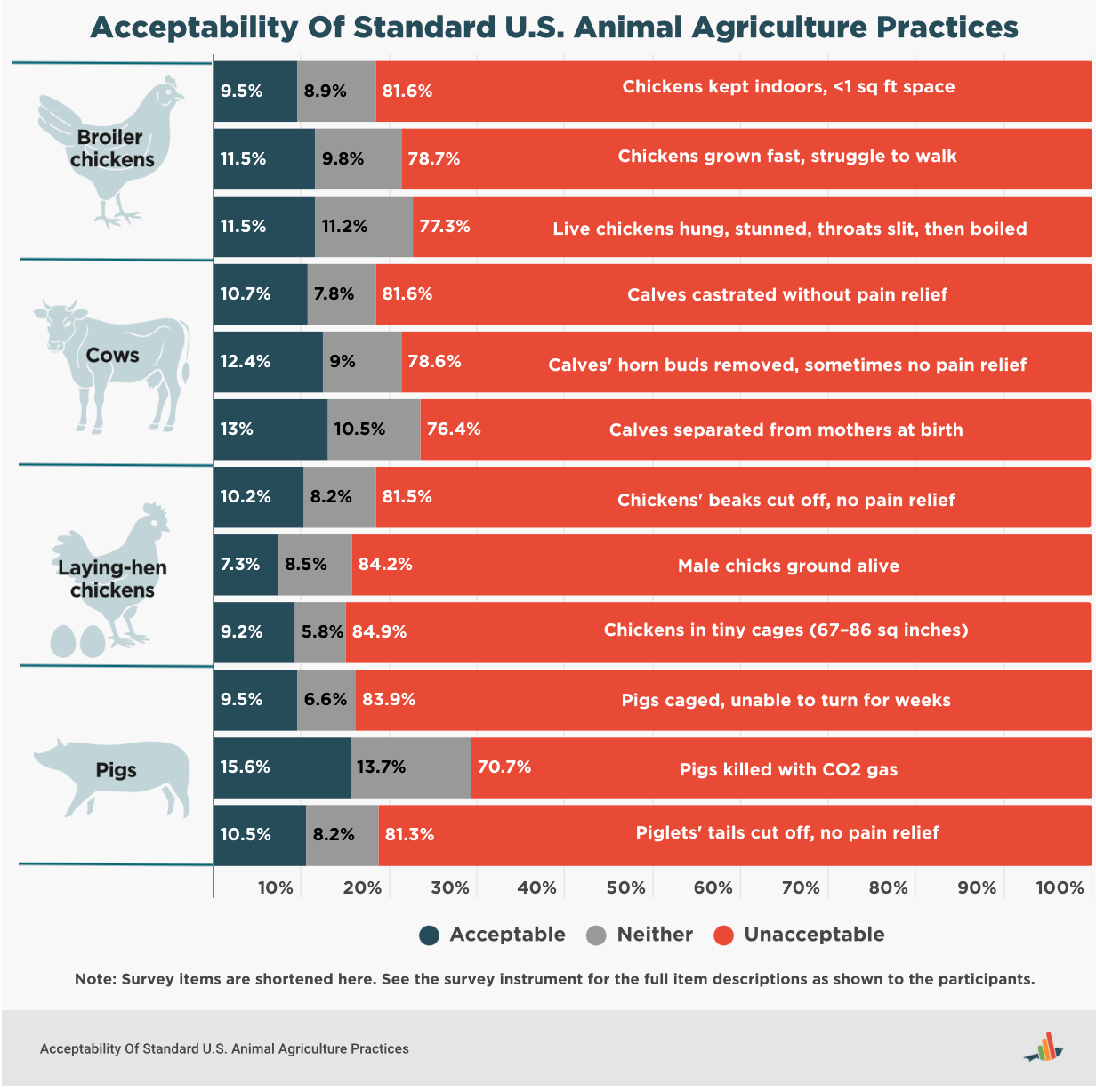
If we can work with every group on win-wins — inside or outside the animal movement — we may go further and make a bigger difference for animals. Advocates for individual behavior change are allies. So are those donating significant money, resources, or careers. Everyone’s an ally.
Great piece, Aditya! And I appreciate that Faunalytics graph. ❤️
Thanks for taking us from this "my optimism curdled into bitterness, then anger, then doom" (very relatable!) to win-win. :-)
It's important to recognize that fighting factory farming is an issue that most people are actually for. Win-wins are definitely something we should focus on more collectively!
Awesome read! 👍 Thanks!